WALFERDANGE
MODULAR AND PARAMETRIC RESIDENTIAL CONVERSION
A2M Architecture
Walferdange/LUX | 2023
Circular design & parametric modular envelope
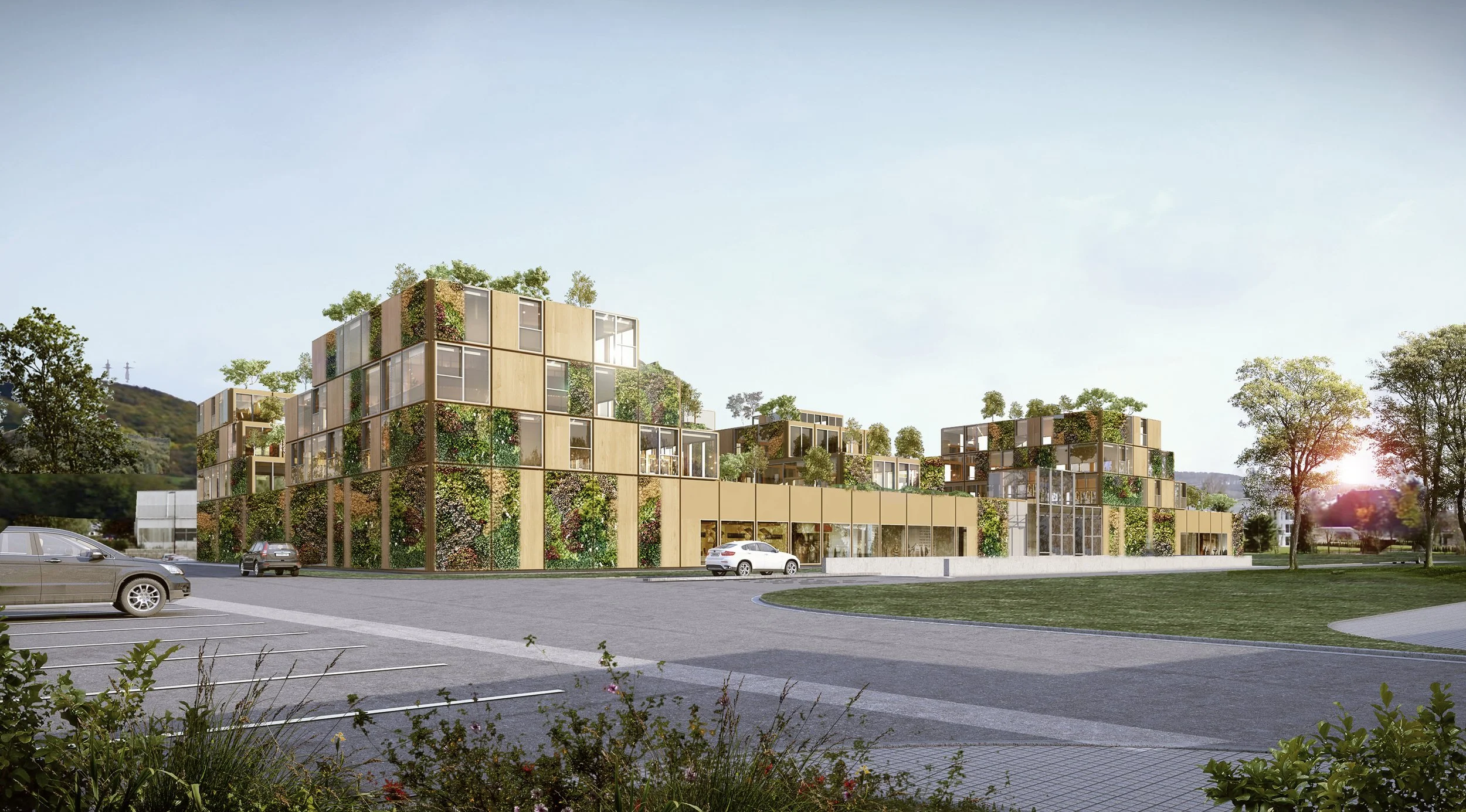
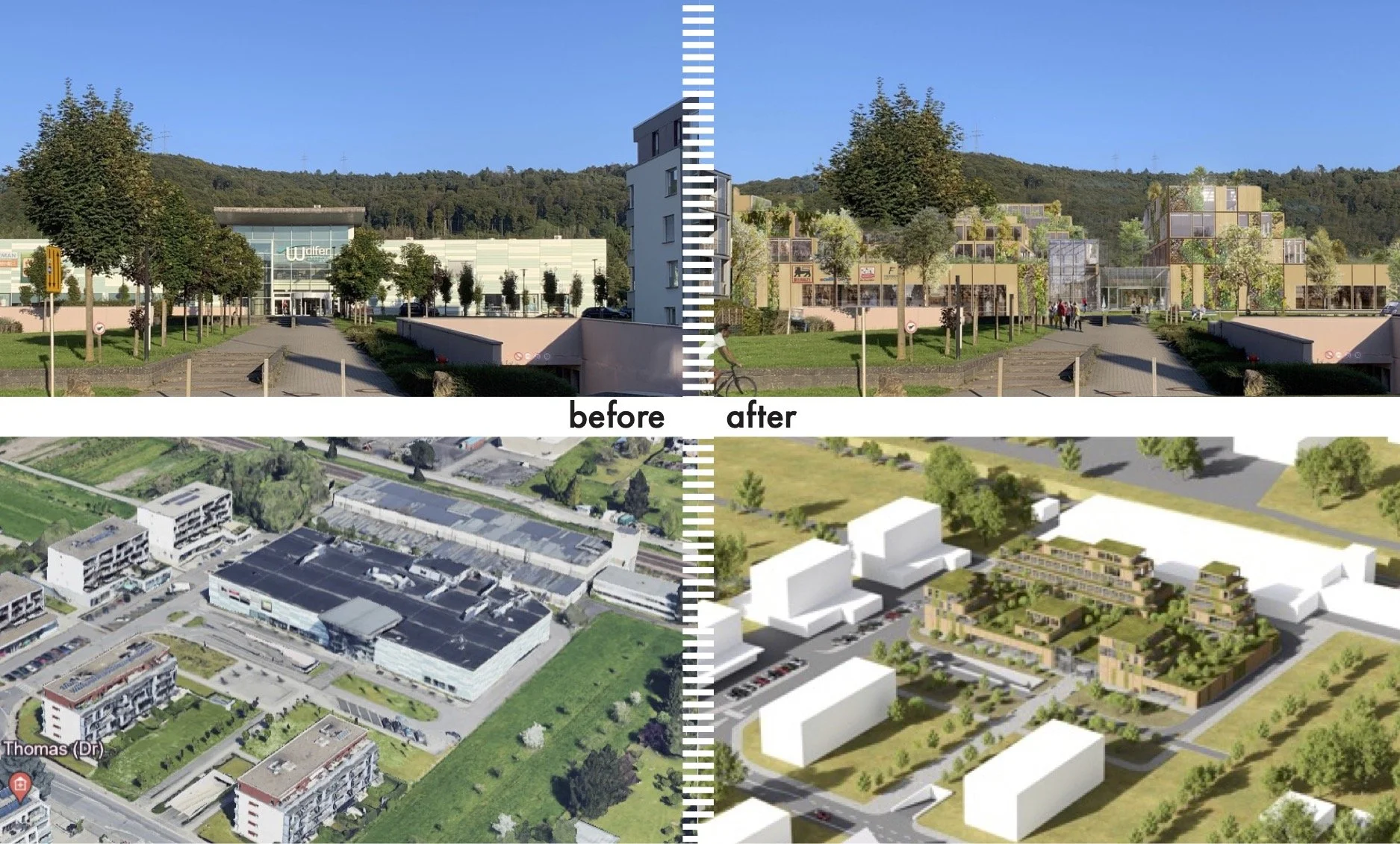
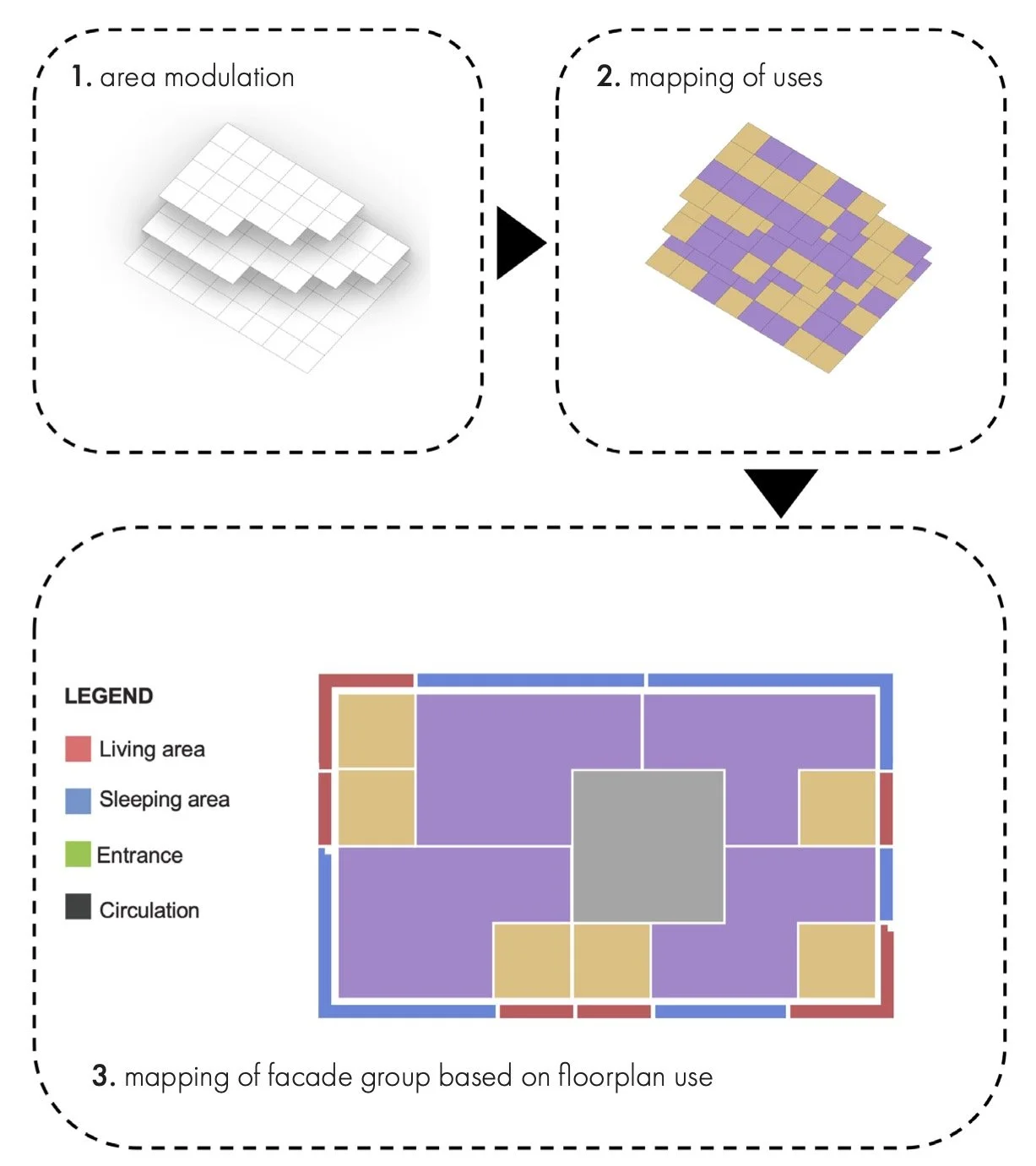
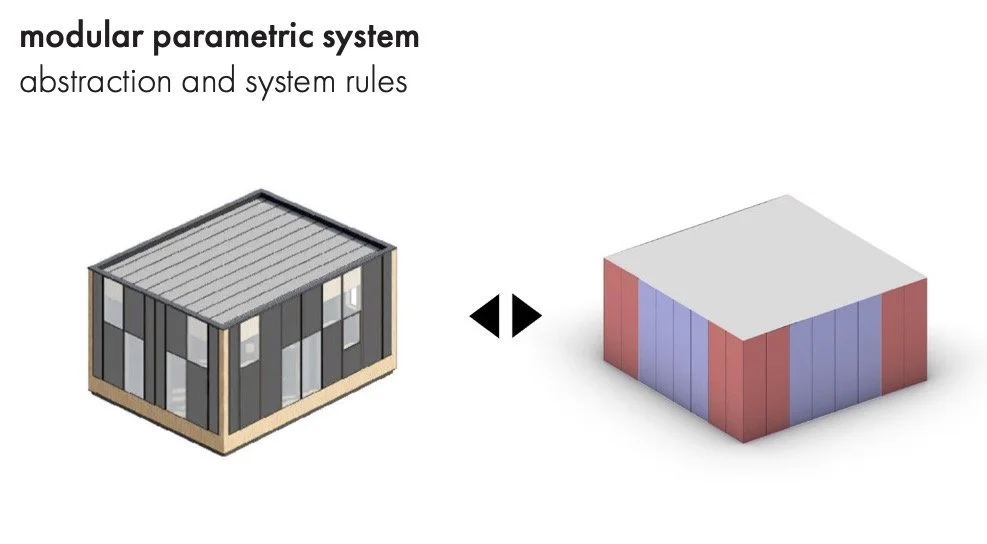
Developed through ongoing research at A2M’s think tank EARTH, the project explores concepts of circular design, DfAD and DfAM, and modular-parametric thinking, forming the foundation of an adaptive reuse strategy for commercial spaces, transforming the the upper floor of a shopping mall into a resilient residential complex of 12,000 m². As Lead Designer, I created a modular parametric system that enabled real-time, data-informed design decisions collaboratively with the client.
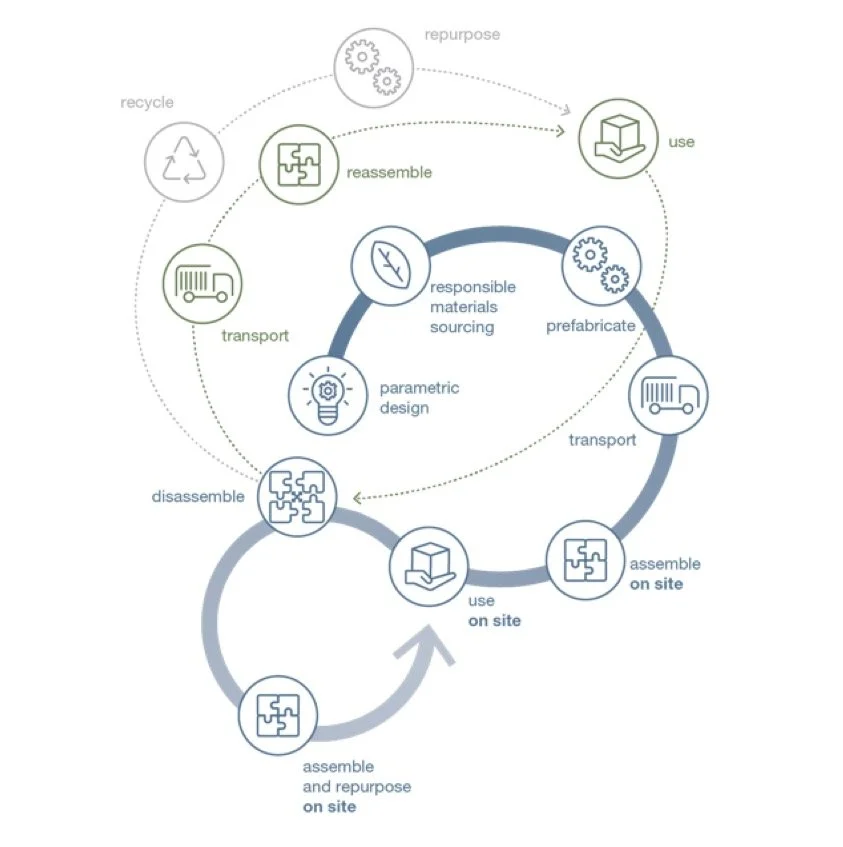
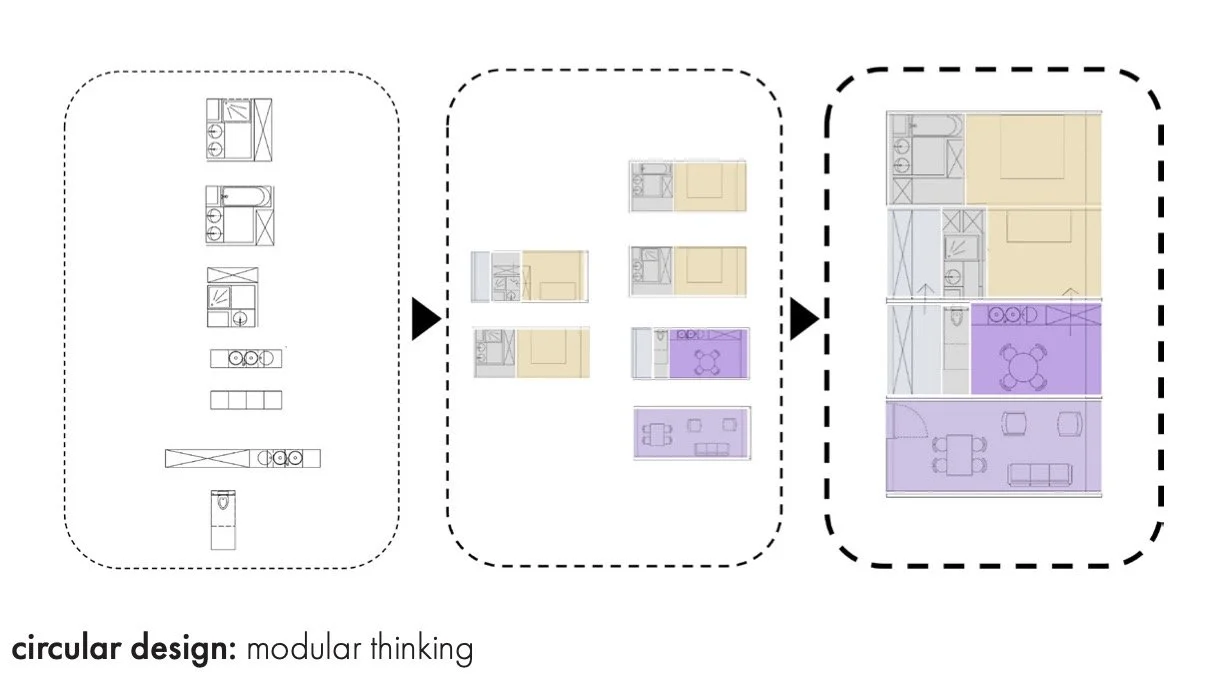
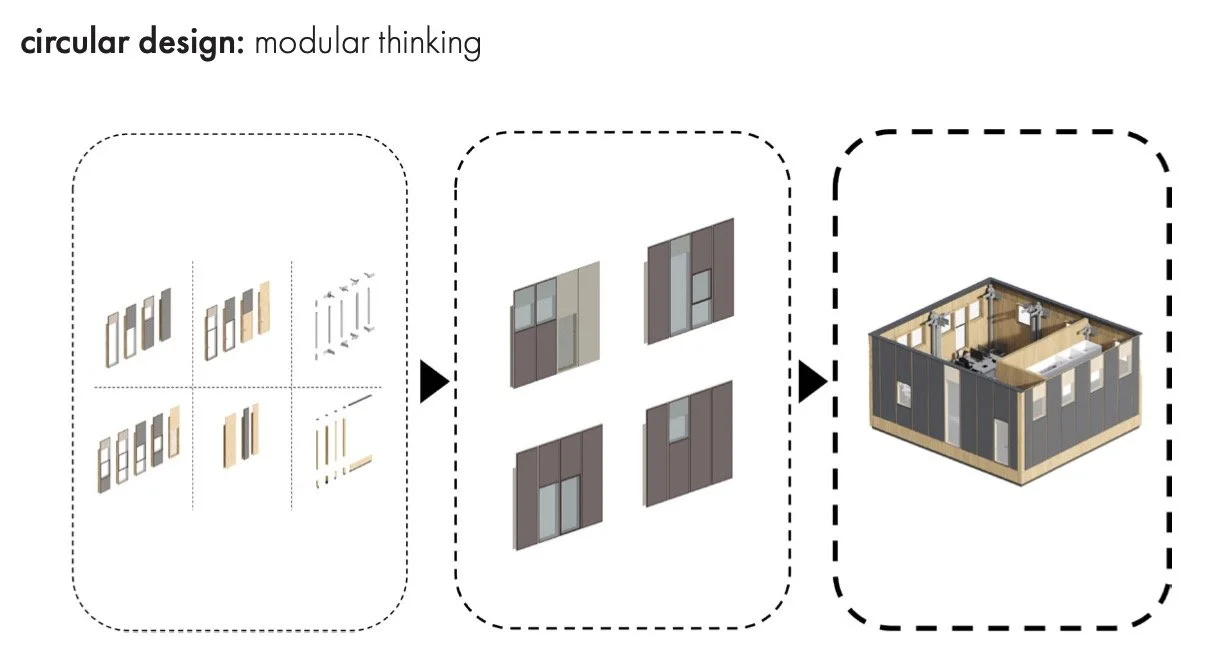
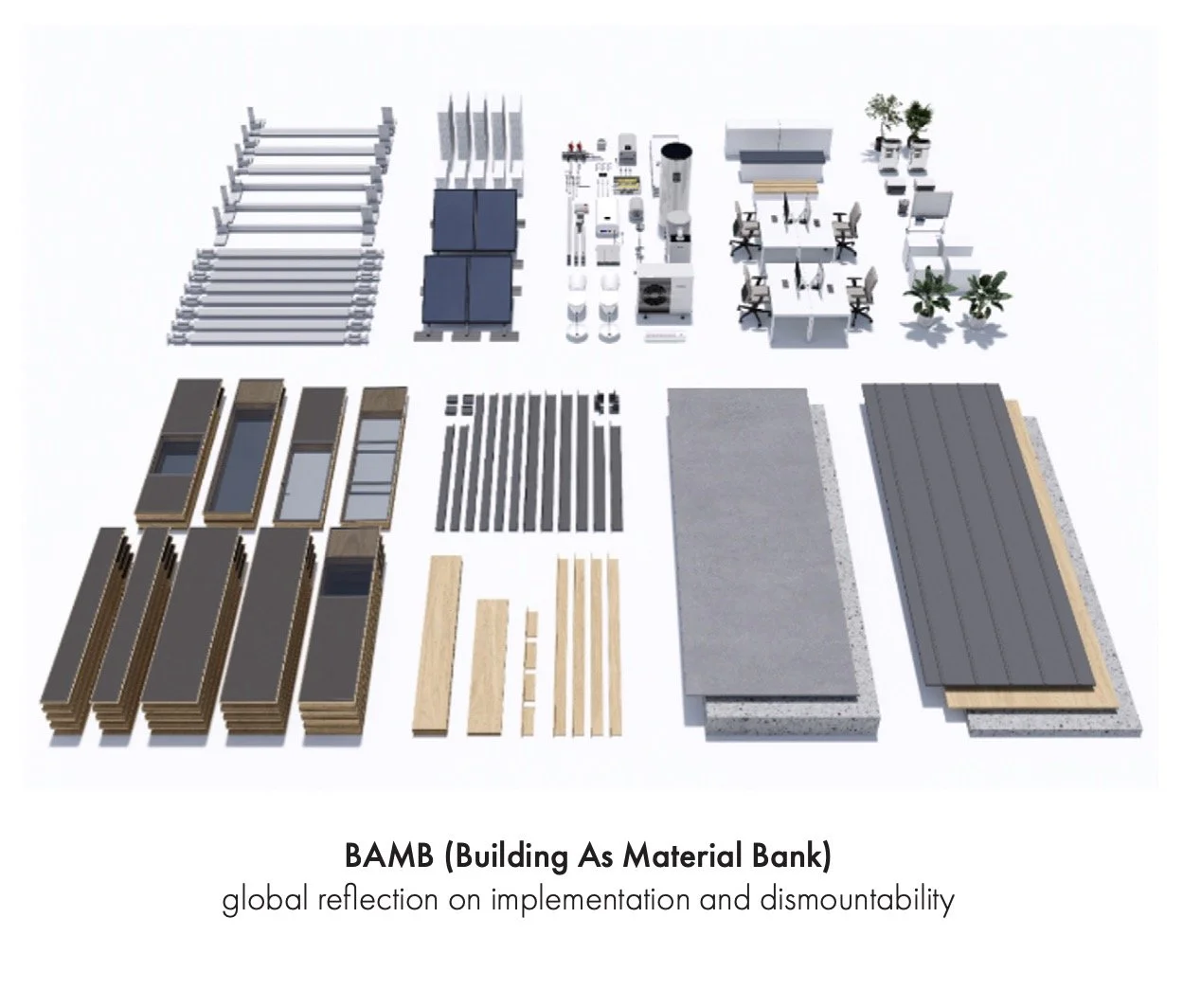
Central to the project is a lightweight, modular, and prefabricated timber structure. Designed for efficient assembly, the modules will be fabricated in a temporary microfactory set up in an adjacent warehouse, promoting circularity and minimizing environmental impact. The entire construction system emphasizes modular thinking, combinatorial flexibility, and planned obsolescence, allowing buildings to evolve or be repurposed.
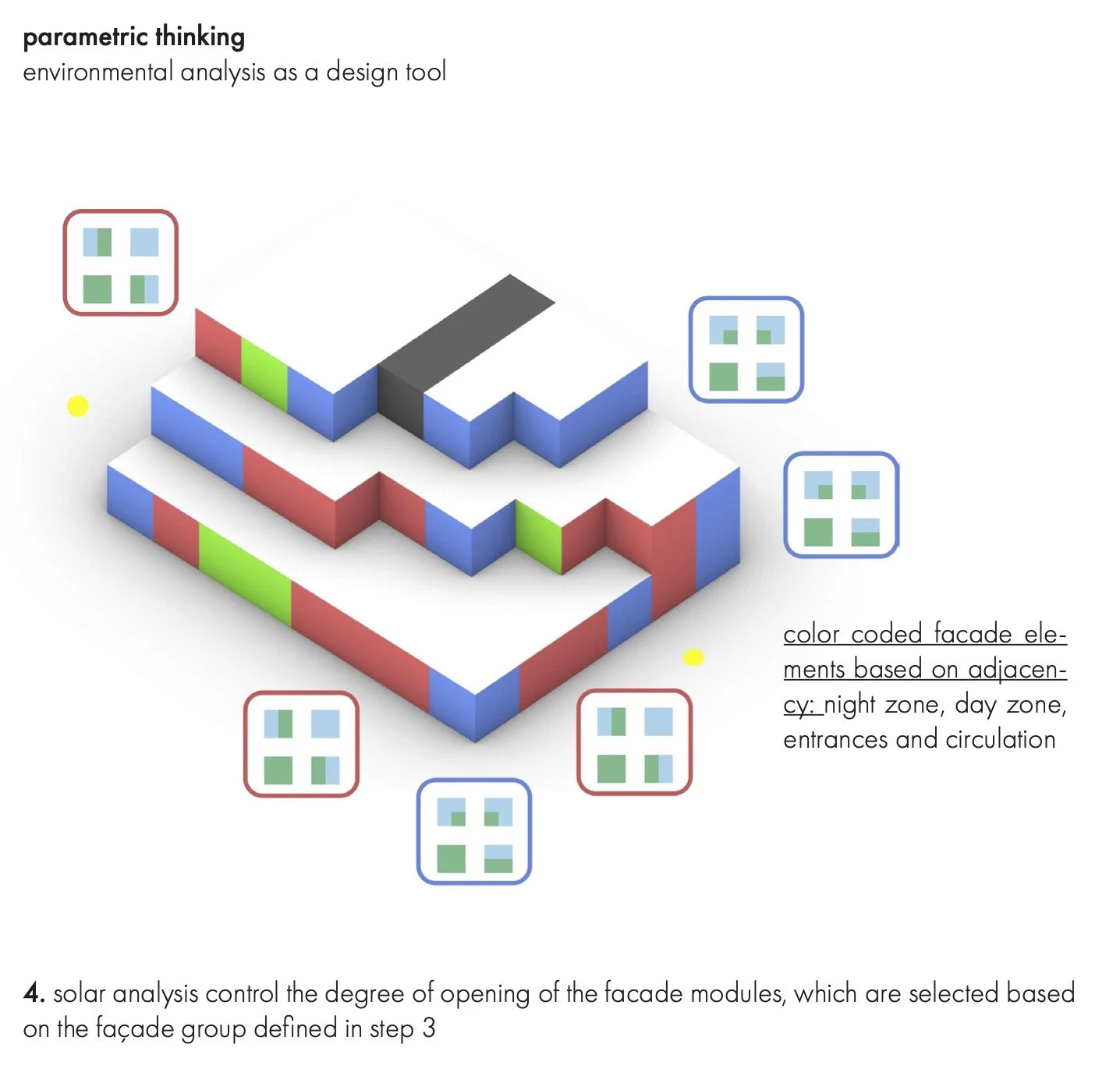
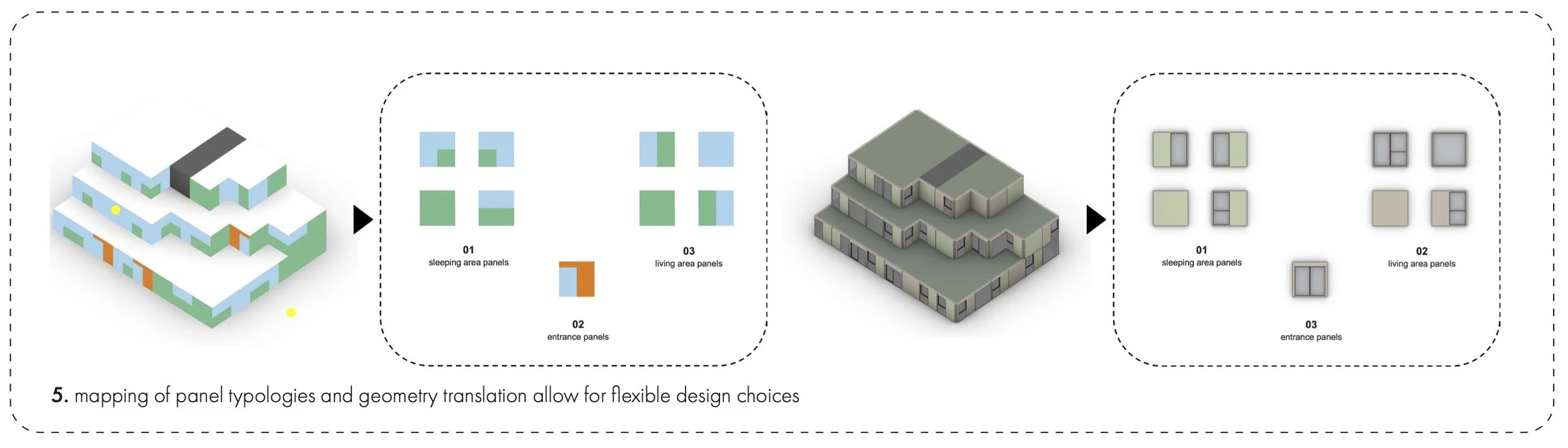
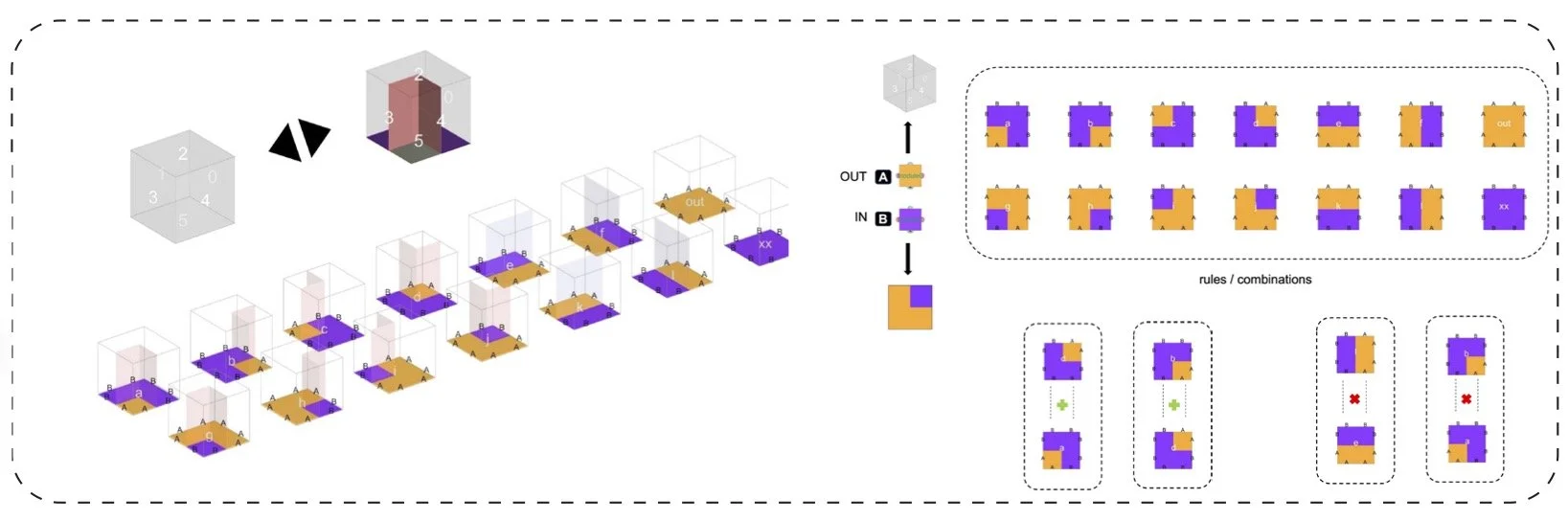
Advanced computational methods, including environmental analysis and solar mapping, guided façade zoning and panel typology selection. The system uses parametrically defined rules to determine panel dimensions, orientations, and openings according to internal uses and climatic considerations, ensuring optimal daylighting, views, and energy performance. Reflecting Cedric Price’s concept of “calculated uncertainty,” the project incorporates flexibility as an inherent design principle, empowering future adaptations, supporting circular economy principles, and positioning architecture as a dynamic, evolving system rather than a fixed artifact.
Key Strategies:
• Real-Time Parametric System: Allows instant evaluation and client feedback on design options.
•Circular Economy and Modular Construction: Prefabricated, modular timber units assembled in a temporary on-site microfactory.
• Environmental Performance: Façade systems guided by detailed solar and environmental analyses.
• Design for Assembly and Disassembly (DfAD): Facilitates future reuse, evolution, or dismantling without ecological damage.
• Parametric Flexibility: Modular components offer extensive aesthetic and functional variability, driven by computational design logic.
Performance | PassiveHouse, Zero Energy, Energy and Water Self-Sufficiency, Circular Design, CO₂ Neutral